Alpha Arbutin vs Niacinamide — Can You Use Both Together? (Pakistan Guide)
Waleed
09 Apr 2026
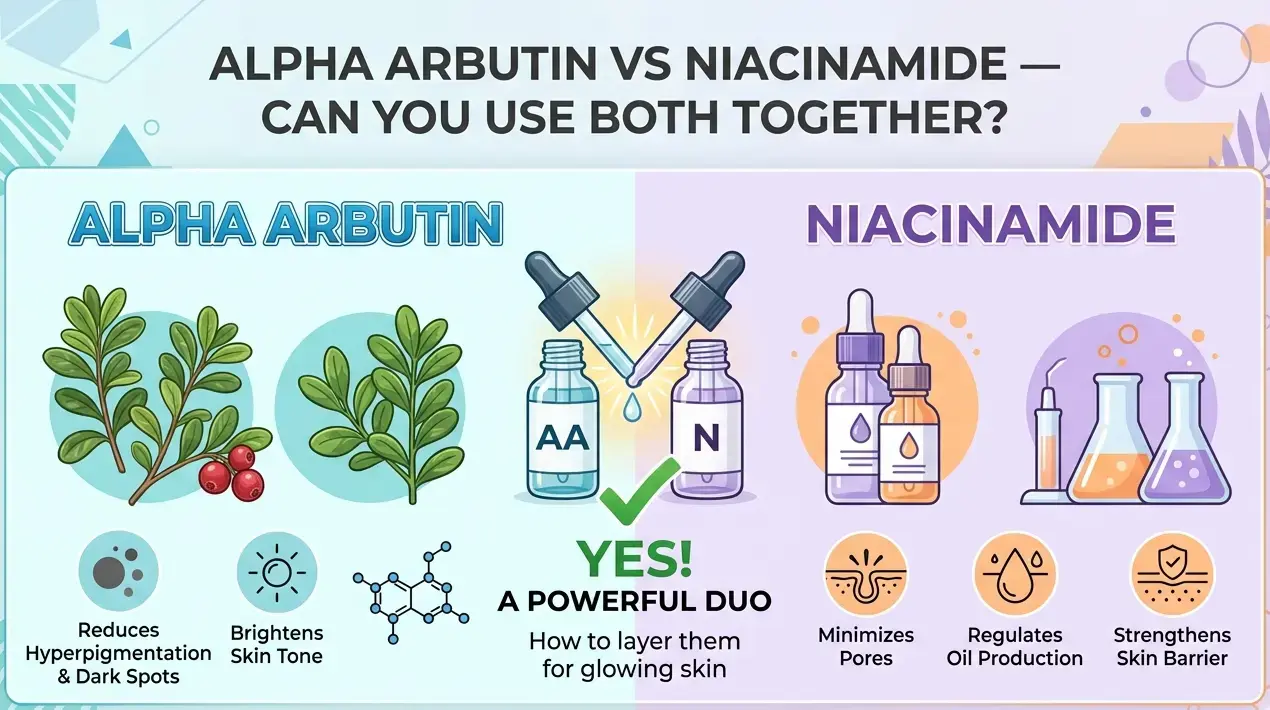
Alpha Arbutin stops dark spots at the source, while Niacinamide repairs the barrier and curbs oil. Together, they target pigmentation from two angles—making this pair the ultimate safe, gentle way to fade acne marks and recover from whitening creams.
Introduction
Pigmentation, uneven skin tone, and acne marks are among the most persistent skin concerns in Pakistan. Between intense UV exposure, a high prevalence of post-acne hyperpigmentation, and the widespread long-term effects of steroid-containing whitening creams, a large number of Pakistani skincare users are actively looking for brightening ingredients that are effective, safe, and practical to use in a daily routine.
Two ingredients consistently appear at the top of evidence-backed brightening recommendations: alpha arbutin and niacinamide. Both are widely available, both have strong clinical backing, and both are frequently discussed together in skincare content. The most common question that follows from this is a practical one: can they be used together, and if so, how?
This guide explains clearly how each ingredient works, what each one does best, how they compare, and — most importantly — how to use them together correctly and safely in a Pakistani skincare routine.
What Is Alpha Arbutin?
Alpha arbutin is a water-soluble glycoside derived from the bearberry plant. It is classified as a tyrosinase inhibitor — it works by binding to the enzyme responsible for initiating melanin synthesis in skin cells, reducing the rate at which new pigment is produced. As the skin's natural cell turnover cycle brings fresher, less-pigmented cells to the surface, existing dark spots and uneven pigmentation gradually fade.
At the concentrations used in cosmetic formulations — typically 1 to 2 percent — alpha arbutin is well-tolerated by most skin types, including sensitive and barrier-damaged skin. It does not alter skin pH, does not exfoliate, and does not cause photosensitisation. This is a significant advantage over older depigmenting agents like hydroquinone, which require prescription supervision, carry documented risks of irritation and paradoxical darkening with long-term unregulated use, and are found in numerous Pakistani formula creams without consumer disclosure.
Alpha arbutin produces results gradually over four to twelve weeks of consistent daily use. It is not a rapid-acting treatment — but its results are genuine, non-reversing improvements in pigmentation that do not depend on ongoing barrier suppression to maintain.
What Is Niacinamide?
Niacinamide is the active form of vitamin B3 used in skincare. It is one of the most versatile and well-researched cosmetic ingredients available — with documented benefits across multiple skin concerns simultaneously, making it particularly valuable in simplified routines.
Its primary roles in skincare include:
- Oil production regulation — niacinamide reduces sebum output from sebaceous glands, making it especially beneficial for oily and acne-prone skin types common in Pakistan's humid and hot climate zones.
- Skin barrier repair and reinforcement — niacinamide stimulates the synthesis of ceramides, the lipid molecules that form the structural foundation of the skin barrier. This makes it directly useful for anyone whose barrier has been compromised by harsh products, whitening cream damage, or chronic dehydration.
- Redness and inflammation reduction — niacinamide reduces the skin's inflammatory response, calming redness and reactive skin without disrupting the barrier or altering pH.
- Post-acne mark improvement — through its anti-inflammatory action and inhibition of melanosome transfer (the movement of pigment from melanocytes to surrounding skin cells), niacinamide contributes to the gradual fading of post-inflammatory marks.
- Overall tone improvement — consistent use of niacinamide at 4 to 5 percent concentration has been shown in clinical studies to produce measurable improvements in overall skin tone evenness over eight to twelve weeks.
How Alpha Arbutin Works for Pigmentation
The melanin production process in the skin begins with the enzyme tyrosinase converting the amino acid tyrosine into dopaquinone, which then proceeds through several steps to form melanin. Alpha arbutin intercepts this process at the tyrosinase step — competing with tyrosine for access to the enzyme and reducing how much melanin is produced as a result.
This mechanism makes alpha arbutin effective across the most common pigmentation presentations in Pakistan:
- Post-acne marks — when acne lesions heal, the residual inflammation drives continued melanin production at the site. Alpha arbutin reduces this pigment deposition during the window when it would otherwise become a persistent dark mark.
- Melasma support routines — melasma involves chronic overactivation of melanocytes in affected areas. Continuous tyrosinase inhibition by alpha arbutin reduces the rate of new pigment accumulation, slowing progressive darkening and contributing to gradual lightening over months of use.
- Uneven skin tone — areas of diffuse pigmentation from accumulated sun exposure respond well to consistent alpha arbutin application over eight to twelve weeks of daily use.
For people recovering from whitening cream or formula cream damage, where the skin's barrier has been compromised and strong actives cannot yet be tolerated, KELVS Alpha Arbutin Serum provides a gentle, effective brightening option that can be reintroduced once the skin has been stabilised on a minimal repair routine — typically after four to six weeks of a gentle cleanser, ceramide moisturiser, and mineral sunscreen.
Recovering from formula cream damage? Read: Side Effects of Formula Creams on the Face.
How Niacinamide Works for Skin Brightening
Niacinamide's brightening mechanism is different from alpha arbutin's — it does not target melanin production directly but rather limits how much of the melanin that is produced reaches the skin's surface cells.
Melanin is produced in melanocytes and then packaged into structures called melanosomes, which are transferred to surrounding keratinocytes (the surface skin cells) where the pigment becomes visible. Niacinamide inhibits this transfer process, reducing the amount of melanin that accumulates in the outer skin layers even when melanocytes are actively producing it.
Beyond this specific brightening action, niacinamide supports skin tone improvement through several indirect mechanisms:
- Reducing skin inflammation that would otherwise trigger melanin overproduction
- Strengthening the barrier, which reduces the reactive episodes that produce post-inflammatory pigmentation
- Regulating sebum production, which decreases the frequency and severity of acne breakouts — and therefore the acne marks that follow them
At concentrations of 2 to 5 percent, niacinamide is appropriate for daily use on sensitive, oily, acne-prone, and barrier-compromised skin. Concentrations above 10 percent may cause temporary flushing on sensitive skin and are not necessary for most cosmetic applications.
Alpha Arbutin vs Niacinamide — Key Differences
| Consideration | Alpha Arbutin | Niacinamide |
|---|---|---|
| Primary Brightening Mechanism | Inhibits tyrosinase — reduces melanin production at source | Inhibits melanosome transfer — reduces melanin reaching skin surface |
| Pigmentation Strength | Strong — direct targeted depigmenting action | Moderate — gradual tone-evening through indirect pathways |
| Oil Control | None | Yes — reduces sebum production; beneficial for oily and acne-prone skin |
| Barrier Repair Support | Neutral — does not disrupt or actively repair the barrier | Active — stimulates ceramide synthesis; directly supports barrier recovery |
| Acne Suitability | Suitable — does not aggravate acne; helps fade PIH marks | Excellent — anti-inflammatory, oil-regulating, pore-appearance-reducing |
| Sensitive Skin Compatibility | High — well-tolerated including on barrier-compromised skin | High at 2–5% — may cause mild flushing at higher concentrations |
| Melasma Support | Better — directly reduces melanin production in affected areas | Supportive — reduces inflammation that worsens melasma; indirect benefit |
| Summer Suitability in Pakistan | High — stable in heat; no photosensitisation | High — stable across temperatures; no photosensitisation |
| Collagen or Structural Benefit | None | Mild — improves skin elasticity and barrier integrity over time |
Can You Use Alpha Arbutin and Niacinamide Together?
Yes — and their combination is one of the most frequently recommended ingredient pairings by dermatologists for brightening routines on sensitive and reactive skin. The reason is straightforward: they address pigmentation through two different, non-competing mechanisms. Alpha arbutin reduces how much melanin is produced; niacinamide reduces how much of that melanin reaches and accumulates in the skin's visible surface layers. Used together, they target the same end goal — a more even, less pigmented skin tone — via complementary pathways that reinforce each other.
There are no known incompatibility issues between alpha arbutin and niacinamide. They are both water-soluble, both function across a compatible pH range, and neither destabilises nor reduces the efficacy of the other. They can be applied in the same routine, in the same session, morning or evening.
According to the American Academy of Dermatology, combining brightening ingredients that target different steps in the pigmentation process is a recognised strategy for improving outcomes in hyperpigmentation management — and the alpha arbutin and niacinamide pairing represents exactly this complementary, multi-pathway approach.
Benefits of Using Alpha Arbutin and Niacinamide Together
- Dual-pathway pigmentation improvement — melanin production is reduced by alpha arbutin at the source, and melanin transfer to surface cells is simultaneously reduced by niacinamide; both mechanisms active together produce better cumulative results than either alone
- Stronger barrier protection — niacinamide's ceramide-stimulating action compensates for the neutral barrier impact of alpha arbutin, producing a routine that brightens and actively strengthens the skin's protective function simultaneously
- Reduced overall irritation risk — both ingredients are gentle, and niacinamide's anti-inflammatory action can buffer any mild sensitivity that occasionally occurs with new active introduction
- Balanced oil production — particularly relevant for Pakistan's humid climate, where oily and combination skin types benefit from niacinamide's sebum regulation alongside alpha arbutin's pigment control
- More comprehensive acne mark treatment — alpha arbutin fades existing PIH marks while niacinamide reduces the inflammation that creates new ones; together they address both the cause and the consequence of post-acne pigmentation
Best Routine Order for Using Both Ingredients
Both alpha arbutin and niacinamide are water-based actives that are applied after cleansing and before moisturiser. The standard layering principle — thinnest texture first, thicker textures after — applies to both. When using both in the same routine step, apply niacinamide first, allow it to absorb, then apply alpha arbutin.
The reasoning behind this order is practical rather than chemical. Niacinamide's barrier-supporting action prepares the skin surface and may improve the receptivity of subsequently applied actives. Alpha arbutin, as the more targeted active, benefits from being applied to skin that has already received niacinamide's anti-inflammatory conditioning. That said, the difference is modest — the more important factor is that both are applied consistently every day, in any order, rather than optimal sequencing being inconsistently followed.
A complete routine incorporating both ingredients:
- Gentle cleanser — pH-balanced, fragrance-free; lukewarm water; pat dry
- Niacinamide serum — apply to clean skin; allow 60 seconds to absorb
- Alpha arbutin serum — apply after niacinamide has absorbed; allow 60 seconds
- Moisturiser — ceramide-rich, fragrance-free; apply while skin is slightly damp
- Sunscreen SPF 30 or above — mineral formulation preferred; applied as the final morning step
Morning and Night Routine Examples
Morning routine:
- Gentle cleanser — remove overnight sebum; pat dry
- Niacinamide serum — anti-inflammatory and barrier-supporting preparation for the day
- Alpha arbutin serum — tyrosinase inhibition active during the day
- Moisturiser — ceramide and hyaluronic acid base to lock in hydration
- Mineral sunscreen SPF 30 or above — non-negotiable; without it, UV exposure re-triggers melanin production and negates the work of both brightening actives
Evening routine:
- Double cleanse if wearing sunscreen — micellar water first, then gentle cleanser; single cleanse if no sunscreen was worn
- Niacinamide serum — supports overnight barrier repair and cell renewal
- Alpha arbutin serum — overnight tyrosinase inhibition during the skin's active regeneration phase
- Moisturiser — slightly richer formula at night; provides occlusion to support overnight repair
Sunscreen is applied only in the morning. It should be reapplied every two hours during outdoor exposure in Pakistan's summer UV conditions.
Which Ingredient Works Better for Acne Marks?
For post-inflammatory hyperpigmentation from acne, the combination of both ingredients is more effective than either alone — but each contributes differently to the outcome.
Alpha arbutin's advantage for acne marks is direct and specific: by inhibiting tyrosinase during the period of post-acne inflammation, it reduces the amount of melanin deposited at the healed lesion site. This is the most targeted available mechanism for addressing PIH in a non-prescription cosmetic routine. Consistent alpha arbutin use prevents new marks from deepening while gradually fading existing ones through cell turnover.
Niacinamide addresses the upstream cause of acne marks. Its anti-inflammatory action reduces the severity of the inflammation that triggers PIH in the first place. Its oil-regulating properties reduce the frequency of new breakouts — meaning fewer marks are created. And its melanosome transfer inhibition adds a secondary fading mechanism that complements alpha arbutin's melanin production reduction.
For acne mark management in Pakistan's climate, this combination — paired with a dedicated non-comedogenic moisturiser and daily mineral SPF — represents a well-rounded, gentle, and sustainable approach.
Which Ingredient Works Better for Oily Skin?
For oily skin, niacinamide is the more directly beneficial ingredient. No other cosmetically available skincare active has as well-documented an effect on reducing sebum production as niacinamide at 4 to 5 percent concentration. Clinical studies have shown measurable reductions in sebum output and improvements in pore appearance with consistent niacinamide use over eight to twelve weeks.
Alpha arbutin has no oil-controlling properties and does not directly address sebum production. However, it remains a valuable addition to a routine for oily skin users who also deal with post-acne pigmentation — the most common secondary concern among this group.
For oily or combination skin in Pakistan's humid summer climate, niacinamide is an especially practical ingredient because it reduces shine without drying the skin or disrupting the barrier — something that astringent toners, alcohol-based products, and abrasive scrubs (all commonly used for oiliness in Pakistan) consistently fail to do sustainably.
Which Ingredient Works Better for Sensitive Skin?
Both ingredients are well-suited to sensitive skin when used at appropriate concentrations, and their combination can actually be gentler than using either in isolation with a harsher active.
Alpha arbutin's gentle profile — no pH disruption, no exfoliation, no photosensitisation — makes it one of the most accessible brightening actives for reactive skin. It can be introduced relatively early in a recovery routine once the skin barrier has stabilised.
Niacinamide at 2 to 5 percent actively supports barrier recovery through ceramide stimulation and reduces the inflammatory responses that make sensitive skin reactive to environmental triggers. For skin that has been damaged by whitening creams or harsh routines, niacinamide is one of the most therapeutically useful non-prescription ingredients available.
Together, they provide brightening that does not compromise barrier function — which is the central challenge for sensitive skin seeking pigmentation improvement. The pairing avoids the trade-off that often occurs with stronger brightening actives, where efficacy comes at the cost of irritation.
According to DermNet's clinical overview of niacinamide, niacinamide is one of the most broadly tolerated cosmetic actives in dermatological practice, suitable for use across all skin types including reactive and compromised skin.
Which Ingredient Works Better for Melasma?
For melasma — the hormonally triggered, UV-worsened pigmentation that commonly affects Pakistani women across the cheeks, forehead, and upper lip — alpha arbutin is the more targeted daily-use active.
Melasma is driven by chronic, persistent overactivation of melanocytes. Alpha arbutin's continuous tyrosinase inhibition directly reduces the rate of melanin production in affected areas — slowing progressive darkening and contributing to gradual lightening over sustained use. It is one of the recommended ingredients within a broader melasma management approach that includes strict sun protection and, in more complex cases, prescription treatment under dermatological guidance.
Niacinamide plays a supportive role in melasma routines. Its inhibition of melanosome transfer means that less of the melanin produced in affected areas reaches the visible skin surface. Its anti-inflammatory properties also help reduce one of the factors that worsens melasma — skin inflammation from UV exposure, heat, or harsh products. Both roles are meaningful, but neither addresses the root cause of melanocyte overactivation the way tyrosinase inhibition does.
For melasma in Pakistan, the most practical daily combination is alpha arbutin and niacinamide applied consistently alongside mineral sunscreen. This combination targets two stages of the pigmentation process and provides daily UV-defence support without the irritation risk that accompanies stronger depigmenting agents.
How Long Results Take When Using Both Together
Using alpha arbutin and niacinamide together does not produce dramatically faster results than using either alone, but the combination produces more comprehensive improvement — addressing both pigmentation intensity and tone evenness simultaneously.
Weeks 1 to 2: Skin may feel calmer and more hydrated as niacinamide's barrier support takes effect. Oily skin types often notice reduced shine by week two. No visible pigmentation change is expected at this stage.
Weeks 3 to 4: Some users begin to notice that existing marks appear slightly less prominent. Niacinamide's melanosome transfer inhibition begins to reduce pigment accumulation at the skin surface. Skin tone may look marginally more even.
Weeks 5 to 8: This is the primary result window. Acne marks fade more noticeably; areas of uneven tone appear more uniform. The combination's dual mechanism is producing cumulative visible improvement that builds on the gradual cell turnover cycle. Users with melasma may notice slowing of progressive darkening.
Beyond 8 weeks: Continued improvement with consistent use. Results stabilise and are maintained as long as the routine continues and sun protection is applied daily. Without sunscreen, UV exposure re-triggers melanin production and reverses the progress of both ingredients.
Common Mistakes When Using Alpha Arbutin and Niacinamide Together
- Skipping sunscreen — the most consequential mistake. Both ingredients work by reducing melanin production and transfer. Daily UV exposure in Pakistan continuously stimulates melanin production at a rate that overwhelms these inhibitory effects without SPF protection. Sunscreen is not optional — it is what makes these ingredients effective.
- Over-layering additional actives — adding vitamin C, retinol, AHAs, and BHAs into the same routine alongside alpha arbutin and niacinamide significantly increases the risk of cumulative irritation without proportionally increasing brightening benefit. Let two well-chosen ingredients do their work before adding more.
- Using too many serums at once — when four or five serum steps precede moisturiser, absorption becomes inconsistent and the skin's ability to manage the combined ingredient load decreases. Two targeted serums used consistently outperform five applied imprecisely.
- Expecting overnight results — both ingredients operate on the skin's natural cell turnover cycle of approximately 28 days. Measurable results require a minimum of six to eight weeks of daily use. Discontinuing before this window closes means the investment of time and product produces no visible outcome.
Best Choice for Pakistani Skin Types and Climate
The alpha arbutin and niacinamide combination is particularly well-suited to Pakistani skin and environmental conditions for several interconnected reasons.
Heat and humidity stability: Both ingredients are stable across the temperature range Pakistan experiences — unlike L-ascorbic acid vitamin C, which degrades rapidly in summer heat. Neither requires special storage precautions or becomes less effective in Karachi's humidity or Multan's extreme summer temperatures.
UV environment: Pakistan's UV index regularly reaches 10 to 12 in summer. In this environment, ingredients that do not cause photosensitisation — as both alpha arbutin and niacinamide do not — are significantly easier to use safely than those that increase UV vulnerability. Daily mineral sunscreen remains essential, but these ingredients do not add to the UV risk that already exists.
Urban pollution: In Pakistan's more polluted cities, niacinamide's role as an anti-inflammatory and barrier-strengthening ingredient provides an additional layer of protection against pollution-triggered skin stress that would otherwise contribute to dullness and pigmentation.
Whitening cream recovery: For the significant number of Pakistani users whose skin has been damaged by steroid-containing formula creams or other unregulated whitening products, this combination offers a practical re-entry point into active skincare. Both ingredients are gentle enough to introduce once the barrier has been stabilised, and together they begin to address the rebound pigmentation that many formula cream users experience after discontinuing the product — without the risk of further barrier disruption that stronger brightening actives would carry.
Frequently Asked Questions
Can I use alpha arbutin and niacinamide together daily?
Yes. Both alpha arbutin at 1 to 2 percent and niacinamide at 2 to 5 percent are safe for daily use in both morning and evening routines. There are no documented interactions, incompatibilities, or cumulative irritation concerns specific to this combination. Consistent daily use is in fact necessary for either ingredient to produce visible results — intermittent use significantly reduces their effectiveness.
Which should I apply first — alpha arbutin or niacinamide?
Apply niacinamide first, then alpha arbutin, then moisturiser. This order follows the general serum layering principle of thinnest-to-thickest texture and allows niacinamide's conditioning effect to prepare the skin surface before the more targeted alpha arbutin application. That said, the sequencing difference is modest — consistency of daily use is far more important than optimised layering order.
Are they safe for sensitive skin?
Yes. Both ingredients are among the most sensitive-skin-compatible cosmetic actives available. Alpha arbutin does not alter pH or exfoliate the skin. Niacinamide at 2 to 5 percent actively supports barrier repair through ceramide stimulation. Their combination is appropriate even for reactive or barrier-compromised skin — including skin recovering from whitening cream damage — once the barrier has been stabilised on a gentle minimal routine.
Do they remove pigmentation permanently?
No brightening ingredient removes pigmentation permanently, because the underlying triggers — UV exposure, hormonal activity, acne inflammation — remain present and continue to stimulate melanin production. Both ingredients reduce existing pigmentation and prevent new pigmentation from forming, but only while the routine continues and sun protection is applied daily. Discontinuing either the serums or the sunscreen allows pigmentation to return. The correct expectation is long-term management and maintenance, not a one-time cure.
Can they be used with vitamin C?
Yes. Vitamin C can be added to a routine that already includes alpha arbutin and niacinamide. The most practical approach in Pakistan is to apply vitamin C in the morning — where its antioxidant action against daytime UV exposure is most valuable — and use alpha arbutin and niacinamide in the evening routine. This avoids any pH interaction between L-ascorbic acid vitamin C and the other two ingredients, and ensures each active is deployed at the time of day where it contributes most. Those using a stabilised vitamin C derivative rather than L-ascorbic acid have more scheduling flexibility, as pH considerations are less significant.
Are they safe to use in summer in Pakistan?
Yes — both alpha arbutin and niacinamide are thermally stable, do not cause photosensitisation, and are safe for year-round use including Pakistan's peak summer months. For users in high-heat cities like Karachi, Multan, Lahore, and Hyderabad, these ingredients have a practical storage advantage over ingredients like L-ascorbic acid vitamin C, which degrades faster in heat. The standard requirement of mineral sunscreen SPF 30 or above applied every morning applies regardless of season and is the most important single step for managing pigmentation in Pakistan's UV environment.
Conclusion
Alpha arbutin and niacinamide are not competing choices — they are genuinely complementary ingredients that address the same skin goals through different mechanisms. Alpha arbutin reduces melanin production at the enzymatic level. Niacinamide reduces how much melanin reaches the skin's visible surface, supports the barrier, and reduces the inflammation that creates new pigmentation in the first place.
Used together in a consistent routine — supported by a gentle cleanser, a ceramide moisturiser, and non-negotiable daily sunscreen — they represent one of the most practical, well-tolerated, and evidence-backed brightening combinations available for Pakistani skin types. They work particularly well for post-acne pigmentation, uneven tone, oily and acne-prone skin, and for anyone recovering from the barrier damage caused by harsh whitening products.
The routine is simple. The ingredients are safe. The results require patience — but they are real, lasting, and do not come at the cost of your skin's long-term health.
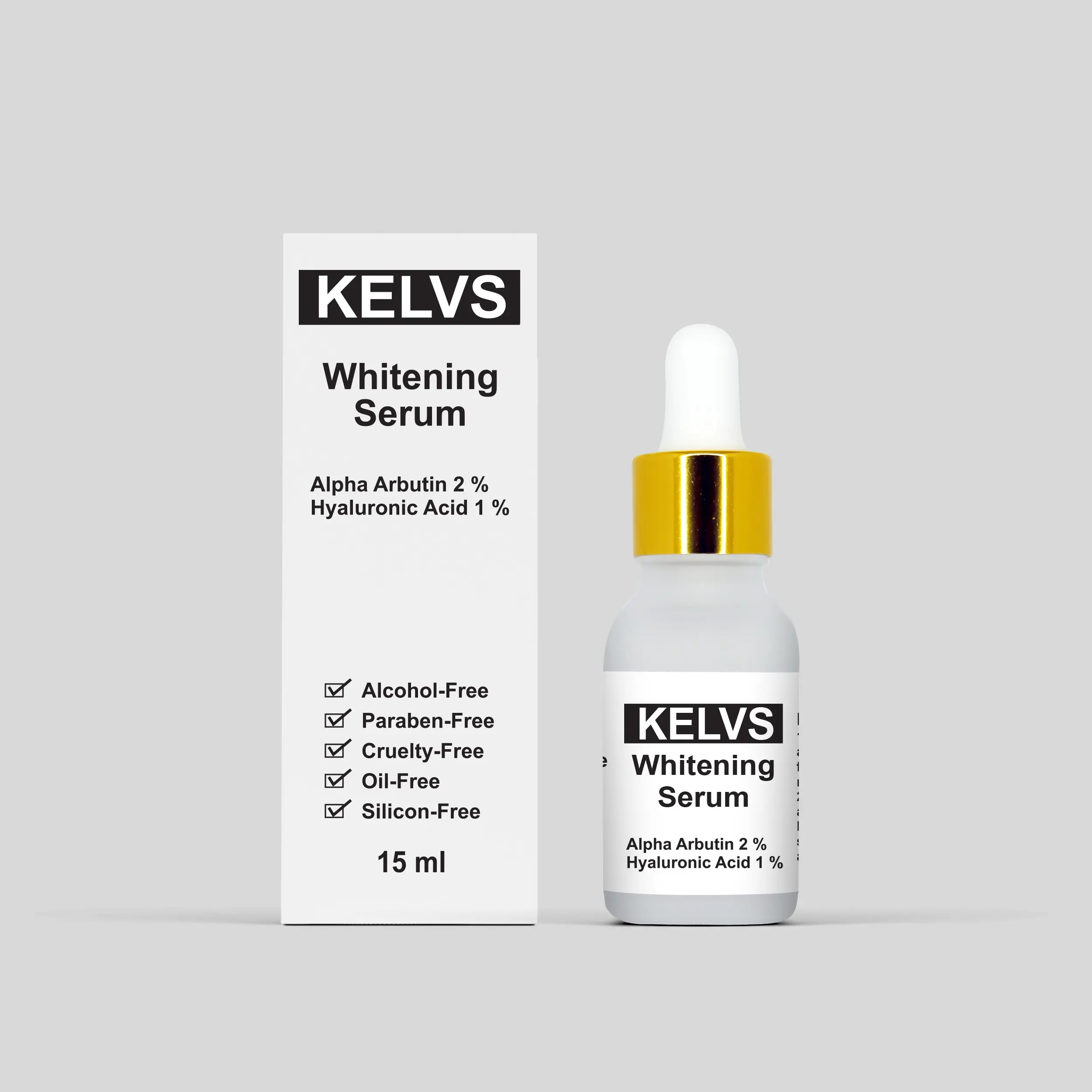 Official
KELVS Whitening Serum | Fades Dark Spots
Scientifically formulated for maximum efficacy with zero harsh irritants. Restores skin balance, clears pores, and accelerates visible recovery.