Alpha Arbutin vs Vitamin C — Which Is Better for Dark Spots? (Pakistan Guide)
Waleed
04 Apr 2026
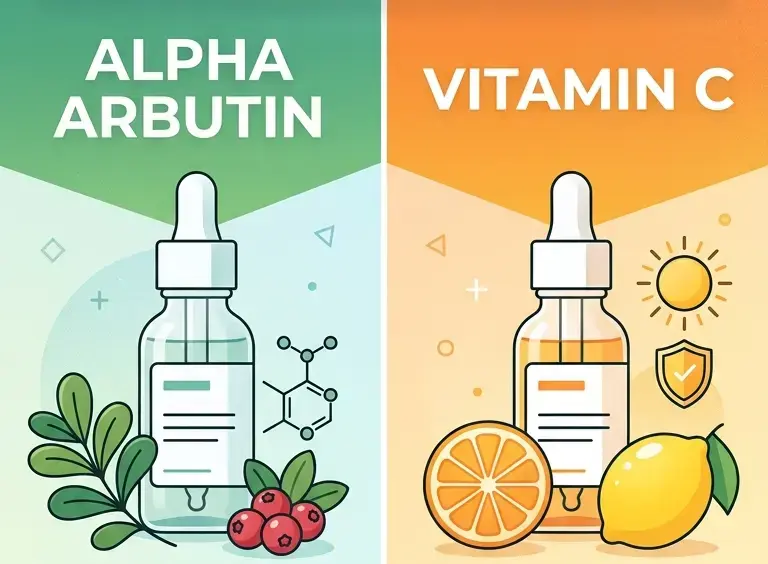
Two of the most recommended brightening ingredients in skincare — alpha arbutin and vitamin C — work through entirely different mechanisms and suit different skin concerns. This guide breaks down the science behind each, compares them head to head across every major pigmentation concern common in Pakistan, and gives you a clear decision framework for choosing the right one for your skin.
Introduction
Dark spots, uneven skin tone, acne marks, and patches of discolouration are among the most common skin concerns reported by people across Pakistan. A combination of intense sun exposure, high rates of post-acne pigmentation, hormonal melasma, and widespread damage from unregulated whitening creams has created a large population of people actively seeking effective, safe brightening solutions.
When researching brightening serums, two names come up more consistently than almost any others: alpha arbutin and vitamin C. Both are widely recommended, both have real evidence behind them, and both appear in the ingredient lists of products positioned for the same skin concerns. But they work through fundamentally different mechanisms, suit different skin types, and perform differently depending on the specific pigmentation concern being addressed.
This guide explains how each ingredient works, compares their performance across the skin concerns most common in Pakistan, and gives you a straightforward decision framework for choosing the right one — or using both together correctly.
What Causes Dark Spots in Pakistan?
Before comparing brightening ingredients, it is useful to understand why dark spots form in the first place — because the cause of pigmentation often determines which ingredient will be most effective.
- Sun exposure — Pakistan's UV index regularly reaches 10 to 12 during summer months. Repeated UV exposure over-stimulates melanocytes, producing concentrated deposits of melanin as dark patches, spots, and freckling on sun-exposed areas.
- Post-inflammatory hyperpigmentation (PIH) from acne — when an acne lesion heals, the residual inflammation triggers melanin overproduction at the site, leaving a flat dark mark. This is one of the most prevalent pigmentation concerns in Pakistan, affecting all skin tones.
- Melasma — a hormonally triggered condition causing symmetrical dark patches, most commonly on the cheeks, upper lip, and forehead. It is worsened significantly by UV exposure and is frequently seen in Pakistani women during and after pregnancy.
- Chronic skin inflammation — including reactions from harsh skincare products, eczema, and contact dermatitis; any inflammatory event can leave behind post-inflammatory darkening.
- Whitening cream misuse — a specific and significant concern in Pakistan, where steroid-containing formula creams often cause rebound hyperpigmentation after discontinuation, leaving skin darker than before.
What Is Alpha Arbutin?
Alpha arbutin is a water-soluble glycoside derived from the bearberry plant. In skincare, it functions as a tyrosinase inhibitor — it blocks the enzyme responsible for initiating melanin production, reducing the rate at which new pigment is formed in the skin. Because it delivers its active component gradually and locally at the pigment cell level, it achieves this without the significant irritation or systemic concerns associated with stronger depigmenting agents like hydroquinone.
Alpha arbutin is widely regarded by dermatologists as one of the safest and best-tolerated brightening ingredients currently available for independent, daily use. It does not cause photosensitisation, is stable across a wide pH range, and has a well-established safety record for both short and long-term cosmetic use. These properties make it particularly suitable for sensitive, reactive, or barrier-compromised skin — a substantial portion of the Pakistani skincare population, given the prevalence of formula cream and steroid cream damage.
What Is Vitamin C?
Vitamin C, in skincare most commonly in its L-ascorbic acid form, is an antioxidant that plays multiple roles in skin health. Its brightening action is a secondary effect of its primary function: neutralising free radicals — unstable molecules generated by UV radiation, pollution, and environmental stressors — that would otherwise trigger oxidative stress, inflammation, and uneven pigmentation.
Vitamin C also inhibits melanin synthesis through a separate pathway from tyrosinase inhibition: it reduces the oxidation of existing melanin precursors, which contributes to visible brightening over time. Additionally, it supports collagen production, which improves skin texture and firmness — a benefit that alpha arbutin does not provide.
The primary limitation of vitamin C — particularly in its most effective L-ascorbic acid form — is its instability. It oxidises readily when exposed to heat, light, and air, degrading into compounds that can cause irritation rather than brightening. This instability is especially relevant in Pakistan's hot climate and requires careful attention to product formulation and storage.
How Alpha Arbutin Works for Dark Spots
Alpha arbutin's mechanism is highly targeted: it binds to the tyrosinase enzyme and prevents it from initiating the melanin synthesis chain. Without the enzyme active, melanocytes produce significantly less melanin. As the skin's natural cell turnover brings new, less-pigmented cells to the surface over a cycle of several weeks, existing dark spots gradually fade and new pigment deposition is reduced.
This mechanism makes alpha arbutin particularly effective for:
- Acne marks (PIH) — the inflammatory trigger for PIH creates a window of heightened melanin production. Alpha arbutin reduces pigment deposition during this window, preventing marks from darkening further and fading existing ones over time.
- Melasma support — by continuously limiting new melanin production, alpha arbutin complements broader melasma management approaches, reducing the rate of new pigment accumulation in affected areas.
- Uneven skin tone — areas of diffuse, uneven pigmentation across the cheeks and forehead respond well to consistent alpha arbutin use over 8 to 12 weeks.
- Sensitive and barrier-damaged skin — because alpha arbutin does not alter skin pH, does not exfoliate, and does not cause photosensitisation, it can be used safely by those whose skin is reactive or recovering from prior damage.
How Vitamin C Works for Dark Spots
Vitamin C addresses pigmentation through its antioxidant activity rather than through direct tyrosinase inhibition. By neutralising free radicals at the skin surface — particularly those generated by UV exposure — it prevents the oxidative cascade that leads to inflammation-triggered melanin overproduction. It also directly reduces the oxidation of dopaquinone (a melanin precursor), which contributes to a visible lightening effect on existing pigmentation over time.
This mechanism makes vitamin C particularly effective for:
- Dull, lacklustre skin — antioxidant protection reduces the greyish, tired appearance that accumulates from daily UV and pollution exposure; skin appears brighter and more radiant with consistent morning use.
- Early, sun-triggered pigmentation — vitamin C applied in the morning provides antioxidant defence that reduces the UV-triggered pigmentation signal before it fully activates melanin production.
- General photo-ageing concerns — alongside its brightening action, vitamin C supports collagen synthesis and reduces the visible impact of cumulative sun damage over time.
According to the American Academy of Dermatology, antioxidant serums including vitamin C are among the evidence-backed strategies for improving skin radiance and protecting against UV-induced skin changes when used alongside daily sunscreen.
Alpha Arbutin vs Vitamin C — Head-to-Head Comparison
| Consideration | Alpha Arbutin | Vitamin C (L-Ascorbic Acid) |
|---|---|---|
| Primary Role | Targeted melanin production inhibitor | Antioxidant with secondary brightening action |
| Pigmentation Strength | Strong — directly targets the melanin production pathway | Moderate — indirect brightening via antioxidant and oxidation mechanisms |
| Speed of Results | Gradual — visible improvement from week 4 to 8 | Moderate — radiance improvement from week 2; pigmentation fading by week 6 to 8 |
| Sensitivity Risk | Low — well-tolerated on most skin types including reactive skin | Moderate — low-pH formulations commonly cause stinging on sensitised skin |
| Barrier Friendliness | High — no pH disruption, no exfoliation, no photosensitisation | Moderate — stable derivatives are gentler; L-ascorbic acid can disrupt barrier at low pH |
| Melasma Suitability | Better — directly reduces new melanin production in affected areas | Supportive — reduces UV-triggered worsening but does not address root cause |
| Acne Mark Effectiveness | Better — specifically addresses post-inflammatory pigmentation | Moderate — some benefit via inflammation reduction |
| Dull Skin Improvement | Moderate — gradual tone improvement over time | Better — antioxidant action produces faster visible radiance improvement |
| Summer Suitability in Pakistan | High — stable in heat; no photosensitisation | Moderate — L-ascorbic acid degrades quickly in heat; requires cool storage |
| Collagen Support | None | Yes — supports collagen synthesis; improves texture and firmness over time |
Which Ingredient Works Faster?
Both ingredients require consistent daily use and non-negotiable sun protection before results are visible. Neither is a rapid-acting treatment in the way that steroid-based whitening creams appear to be — and the gradual nature of their action is precisely what makes them safe for long-term use.
Weeks 1 to 2: Vitamin C users often notice a general improvement in skin radiance and brightness within the first two weeks — not a reduction in dark spots, but a more luminous, less dull overall appearance. Alpha arbutin users typically notice no visible change at this stage; the ingredient is working at the cellular level before changes are visible on the surface.
Weeks 3 to 4: Some alpha arbutin users begin to notice that existing dark marks appear slightly less prominent. Vitamin C users may start to notice very early reduction in recent, superficial pigmentation.
Weeks 5 to 8: This is the primary result window for both ingredients. Alpha arbutin users see clearer fading of acne marks and dark spots; skin tone becomes more uniform. Vitamin C users see continued reduction in sun-related pigmentation and sustained improvement in radiance.
Beyond 8 weeks: Both ingredients continue to improve with consistent use. Alpha arbutin's benefits accumulate as each cell turnover cycle brings fresher, less-pigmented skin to the surface. Vitamin C's collagen support and antioxidant protection deliver longer-term structural improvements that build over months.
Which Ingredient Is Better for Sensitive Skin?
For people with sensitive, reactive, or barrier-compromised skin — a very common presentation in Pakistan among those recovering from formula cream or steroid cream use — alpha arbutin is the more appropriate choice.
Alpha arbutin does not alter skin pH, does not exfoliate, and does not contain the low-pH formulation requirements that make L-ascorbic acid vitamin C challenging on compromised skin. It can be applied twice daily to sensitised skin without stinging, redness, or the disruption of the lipid layer that can accompany high-potency vitamin C serums.
Vitamin C in more stable derivative forms — such as ascorbyl glucoside or sodium ascorbyl phosphate — is more pH-compatible and better tolerated on sensitive skin than L-ascorbic acid. However, these derivatives are less potent, and even in their gentler forms, they carry a higher aggregate irritation risk than alpha arbutin at cosmetic concentrations.
According to DermNet's clinical overview of vitamin C in dermatology, vitamin C formulations require careful selection for patients with sensitive or compromised skin — with stable, higher-pH derivatives recommended over L-ascorbic acid for those with reactive skin types.
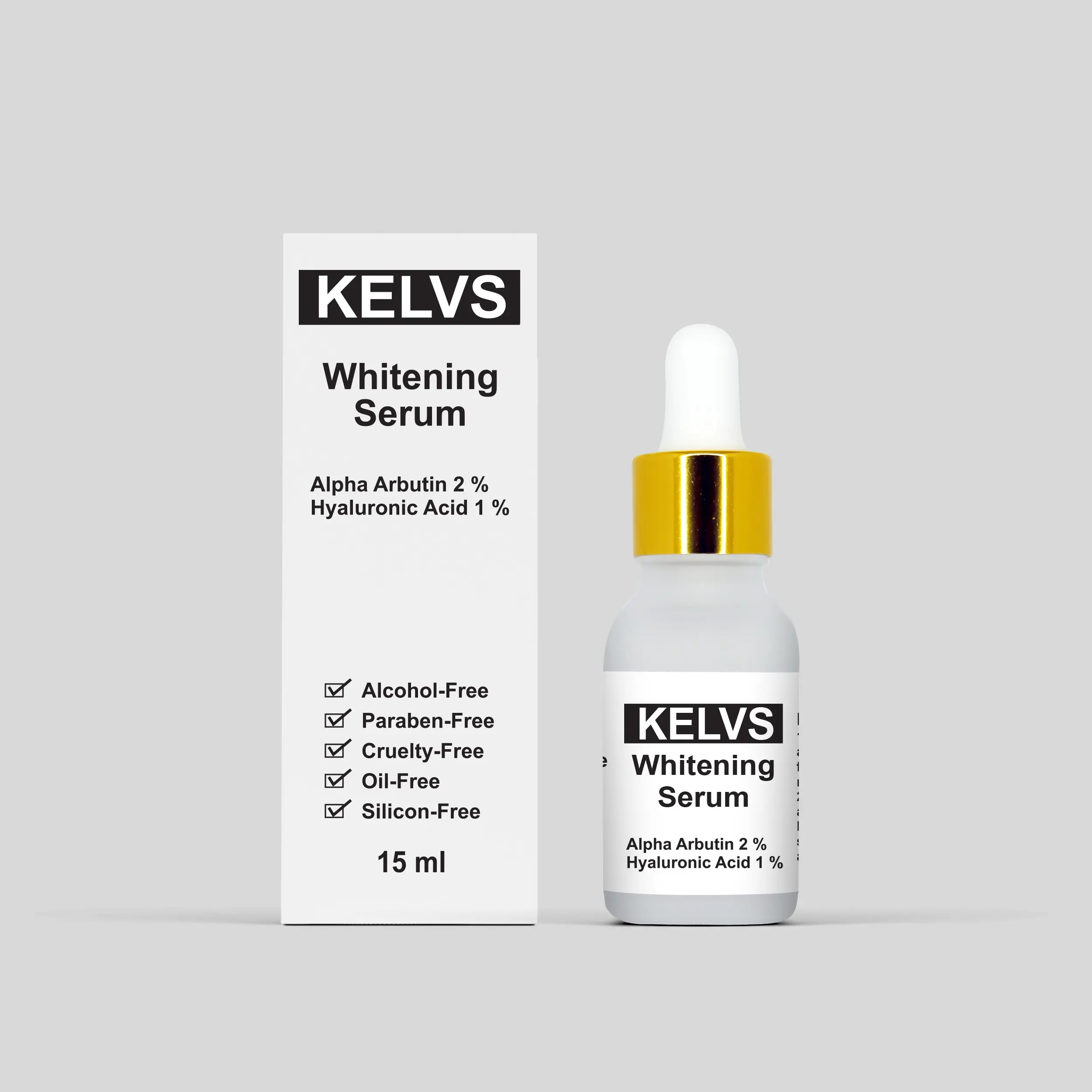
For people whose skin has been damaged by whitening creams and is in an active recovery phase, KELVS Alpha Arbutin Serum is formulated at a 2% concentration with a gentle, fragrance-free base that makes it suitable for use once the skin barrier has been stabilised — typically after four to six weeks of a minimal repair routine.
Which Ingredient Works Better for Acne Marks?
For post-inflammatory hyperpigmentation from acne — the flat, dark marks left after acne lesions heal — alpha arbutin has a clear advantage.
The reason lies in the specific mechanism driving PIH. When acne inflammation resolves, the skin continues producing elevated levels of melanin at the lesion site in response to that inflammatory signal. Alpha arbutin directly reduces this melanin overproduction at the source — inhibiting tyrosinase during the exact window when excess pigment would otherwise be laid down. Over four to eight weeks of consistent use, existing marks fade and new ones are prevented from forming or deepening.
Vitamin C provides some benefit for acne marks via its anti-inflammatory antioxidant action, but it does not specifically target the tyrosinase-driven pigmentation pathway that makes PIH persistent. It is a useful complementary ingredient but not the primary choice for acne mark management.
Which Ingredient Works Better for Melasma?
For melasma — the hormonally triggered, UV-worsened pigmentation that affects large areas of the face symmetrically — alpha arbutin is the more targeted daily-use ingredient, though melasma requires a broader management approach than either ingredient alone can provide.
Melasma is driven by chronic, ongoing overactivation of melanocytes in affected areas. Alpha arbutin's continuous tyrosinase inhibition reduces the rate at which new melanin is produced in these areas, preventing progressive darkening and contributing to gradual lightening over months of consistent use. Vitamin C's benefit for melasma is primarily preventive — its antioxidant action reduces the UV-triggered worsening that makes melasma worse in Pakistan's sun exposure environment.
For significant melasma, a dermatologist-guided approach that may include prescription-strength depigmenting agents alongside topical alpha arbutin and strict sun protection will produce better results than either ingredient alone. Both vitamin C and alpha arbutin are appropriate supporting ingredients within such a plan — but alpha arbutin's direct mechanism makes it the more useful daily-use component.
Which Ingredient Is Better for Dull Skin?
For skin that appears dull, tired, or lacks radiance — without specific discrete dark spots being the primary concern — vitamin C has a clear advantage.
The antioxidant activity of vitamin C neutralises the accumulated oxidative stress from daily UV and pollution exposure that progressively dulls the skin's appearance. Within two to four weeks of consistent morning use, most users notice a visible improvement in radiance — the skin appears brighter and more luminous without specific pigmentation having been treated. This radiance effect is one of the most reliable and widely documented benefits of vitamin C in clinical and cosmetic literature.
Alpha arbutin produces gradual tone-evening that contributes to an overall more luminous appearance over time, but it does not address the oxidative component of skin dullness the way that vitamin C does. For dullness as a primary concern, vitamin C applied in the morning before sunscreen is the preferred choice.
Can You Use Alpha Arbutin and Vitamin C Together?
Yes — and for many Pakistani skin types dealing with both specific dark spots and general dullness, using both ingredients together in a complementary morning-and-evening structure produces better results than either alone.
The key is strategic separation rather than direct layering in the same step. L-ascorbic acid vitamin C operates at a low pH (approximately 2.5 to 3.5) for optimal efficacy. Alpha arbutin is stable across a wider pH range. Applying them directly on top of each other in the same step is not dangerous, but the acidic environment required by vitamin C can reduce alpha arbutin's absorption efficiency. Using them in separate routine steps resolves this without any compromise.
Recommended approach:
- Apply vitamin C serum in the morning — it provides antioxidant defence against daytime UV exposure, which is where it delivers most of its value. Follow with moisturiser and mineral SPF 30+.
- Apply alpha arbutin serum in the evening — on clean skin after cleansing, before moisturiser. This gives it a full overnight absorption window without competing with vitamin C's pH requirements.
Sunscreen applied every morning is non-negotiable in this routine. Without it, daily UV exposure continuously re-triggers melanin production and directly counteracts the brightening work of both ingredients.
Want a simpler approach? Read: Minimalist Skincare Routine for Sensitive Skin in Pakistan.
How to Use Alpha Arbutin in Your Routine
Morning routine with alpha arbutin:
- Cleanse with a pH-balanced, fragrance-free gentle cleanser. Pat dry.
- Apply 2 to 3 drops of alpha arbutin serum to clean skin. Press gently. Allow 60 seconds to absorb.
- Apply a ceramide-rich, fragrance-free moisturiser while skin is still slightly damp.
- Apply mineral sunscreen SPF 30 or above as the final step.
Evening routine with alpha arbutin:
- Double cleanse if wearing sunscreen — micellar water first, then gentle cleanser. Single cleanse if not.
- Apply 2 to 3 drops of alpha arbutin serum. Press into clean skin. Allow 60 seconds to absorb.
- Apply moisturiser. A slightly richer formula at night supports overnight barrier repair.
Recommended : KELVS Whitening (Alpha Arbutin) Serum
How to Use Vitamin C in Your Routine
Morning routine with vitamin C:
- Cleanse with a gentle, pH-balanced cleanser. Pat dry.
- Apply vitamin C serum to clean, dry skin. Allow 60 to 90 seconds to absorb fully before the next step.
- Apply hyaluronic acid serum if using, then moisturiser.
- Apply mineral sunscreen SPF 30 or above. This is critical — vitamin C enhances the antioxidant defence against UV, but it does not replace SPF.
Storage note for Pakistani users: L-ascorbic acid vitamin C degrades rapidly in heat and light. Store your vitamin C serum in a cool, dark location — away from bathroom shelves exposed to steam or sunlight. A serum that has turned yellow or orange has begun to oxidise and may cause irritation rather than brightening.
Recommended : KELVS Vitamin C Serum
Which One Should You Choose?
The choice between alpha arbutin and vitamin C depends primarily on your main skin concern and your skin's current sensitivity level. The following framework covers the most common cases among Pakistani skincare users:
- Sensitive, reactive, or barrier-compromised skin: Alpha arbutin. It is better tolerated, does not disrupt pH or the skin barrier, and is safe to use during and after barrier repair.
- Post-acne dark marks (PIH): Alpha arbutin. It directly targets the tyrosinase-driven mechanism behind post-inflammatory pigmentation.
- Melasma: Alpha arbutin as the primary daily depigmenting active, alongside strict sun protection and a dermatologist-guided plan.
- Dull, lack-lustre skin: Vitamin C. Its antioxidant action produces faster and more reliable radiance improvement than alpha arbutin for this specific concern.
- Sun damage and early pigmentation from UV exposure: Vitamin C in the morning provides targeted antioxidant defence at the point of UV contact.
- Both acne marks and dullness: Use both — alpha arbutin in the evening for pigmentation control, vitamin C in the morning for antioxidant defence and radiance.
The Best Choice for Pakistani Skin Types and Climate
Pakistan's environmental conditions add several practical dimensions to this comparison that are worth considering specifically.
Heat and product stability: L-ascorbic acid degrades quickly in Pakistan's summer temperatures. Users in Karachi, Multan, Lahore, and other cities experiencing extreme summer heat need to be particularly careful about storage and about checking whether their vitamin C product has oxidised before use. Alpha arbutin is stable across a wider temperature range and does not require the same level of storage management.
UV intensity: Pakistan's UV index frequently reaches 10 to 12 in summer. This makes daily mineral sunscreen the most impactful single skincare decision for anyone dealing with pigmentation — regardless of which brightening ingredient they use. Both alpha arbutin and vitamin C are rendered significantly less effective without consistent SPF use in this UV environment.
Pollution and urban skin: In cities with significant air pollution — Lahore, Karachi, Peshawar — vitamin C's antioxidant protection against pollution-generated free radicals is an additional benefit beyond its brightening action. For urban dwellers dealing with both dullness and discrete pigmentation, the combination routine with vitamin C in the morning and alpha arbutin at night addresses both concerns effectively.
Formula cream recovery: For the significant number of Pakistani users recovering from whitening cream or steroid cream damage, alpha arbutin is the appropriate brightening ingredient to introduce once the skin barrier has stabilised. Vitamin C — particularly in its L-ascorbic acid form — can be too stimulating on recently compromised skin. Alpha arbutin's gentler profile makes it the safer brightening re-entry point.
Frequently Asked Questions
Can I use alpha arbutin daily?
Yes. Alpha arbutin at the concentrations used in cosmetic formulations, typically 1 to 2 percent, is safe for twice-daily use in both morning and evening routines. It does not cause photosensitisation and does not require periodic breaks for safe long-term use. Consistent daily application is in fact necessary for results — intermittent use will not produce visible improvement.
Can vitamin C remove pigmentation permanently?
No brightening ingredient — including vitamin C — removes pigmentation permanently, because the underlying triggers for melanin overproduction remain active. UV exposure, hormonal changes, and acne inflammation will continue to generate new pigmentation unless addressed. Vitamin C can produce significant improvement in existing pigmentation and prevent future damage when used consistently with sunscreen, but discontinuing either the serum or sun protection will allow pigmentation to return or worsen.
Which ingredient works faster?
For radiance and general brightness, vitamin C produces earlier visible improvement — often within two to three weeks. For specific dark spots and acne marks, alpha arbutin tends to produce more meaningful results by weeks four to eight, as it is more directly targeting the melanin production pathway. Both require a minimum of six to eight weeks of consistent use before the full scope of their effect can be assessed.
Can alpha arbutin and vitamin C be used together?
Yes, and for many users the combination produces better results than either ingredient alone by addressing pigmentation from two complementary directions simultaneously. The most effective approach is to apply vitamin C in the morning routine before sunscreen, and alpha arbutin in the evening routine after cleansing. This avoids any pH competition between the two ingredients and maximises the distinct contribution each makes at its optimal time of day.
Which is safer for sensitive skin?
Alpha arbutin is consistently better tolerated on sensitive and barrier-compromised skin. It does not require a low-pH formulation environment, does not exfoliate, and does not cause photosensitisation. For people with reactive skin, recovering skin, or any history of adverse reactions to active skincare ingredients, alpha arbutin is the more appropriate starting point. Those who want to use vitamin C on sensitive skin should seek out stable derivative forms such as ascorbyl glucoside or sodium ascorbyl phosphate, which are gentler than L-ascorbic acid.
Which serum is better during summer in Pakistan?
Both can be used during Pakistan's summer, but with specific considerations. Alpha arbutin is the more reliably stable ingredient in high-heat conditions and does not increase photosensitivity — making it suitable year-round without special precautions beyond daily sunscreen. Vitamin C in L-ascorbic acid form degrades faster in summer heat and requires careful cool storage. For those who find their vitamin C serum less effective in summer, switching to a stable derivative form or using it in the evening and relying on alpha arbutin in the morning is a practical adjustment. In both cases, mineral sunscreen SPF 30 or above applied every morning is the most critical step for managing pigmentation in Pakistan's summer UV environment.
Build your complete sensitive skin routine: Best Skincare Routine for Sensitive Skin in Pakistan.
Conclusion
Alpha arbutin and vitamin C are not competing products — they are complementary tools that address pigmentation through different mechanisms and suit different skin situations. Alpha arbutin is the more targeted, more sensitive-skin-friendly, more climate-stable option for managing discrete dark spots, acne marks, and melasma. Vitamin C is the superior choice for improving overall radiance, protecting against UV-driven pigmentation, and providing structural skin benefits through collagen support.
For most Pakistani skin types dealing with the combination of sun exposure, acne marks, and a history of harsh product use, a routine that incorporates alpha arbutin in the evening and vitamin C in the morning — both supported by consistent mineral sunscreen — addresses the full spectrum of brightening needs more completely than either ingredient alone.
The key is not which ingredient wins a theoretical comparison, but which combination of evidence-backed ingredients, used correctly and consistently, serves your specific skin in your specific environment. Both alpha arbutin and vitamin C, used with discipline and patience, can deliver genuine, lasting improvement. Neither will work without sunscreen.
 Official
KELVS Whitening Serum | Fades Dark Spots
Scientifically formulated for maximum efficacy with zero harsh irritants. Restores skin balance, clears pores, and accelerates visible recovery.