Steroid Cream Damage on Face – Symptoms, Treatment & Recovery (Pakistan Guide)
Waleed
12 Mar 2026
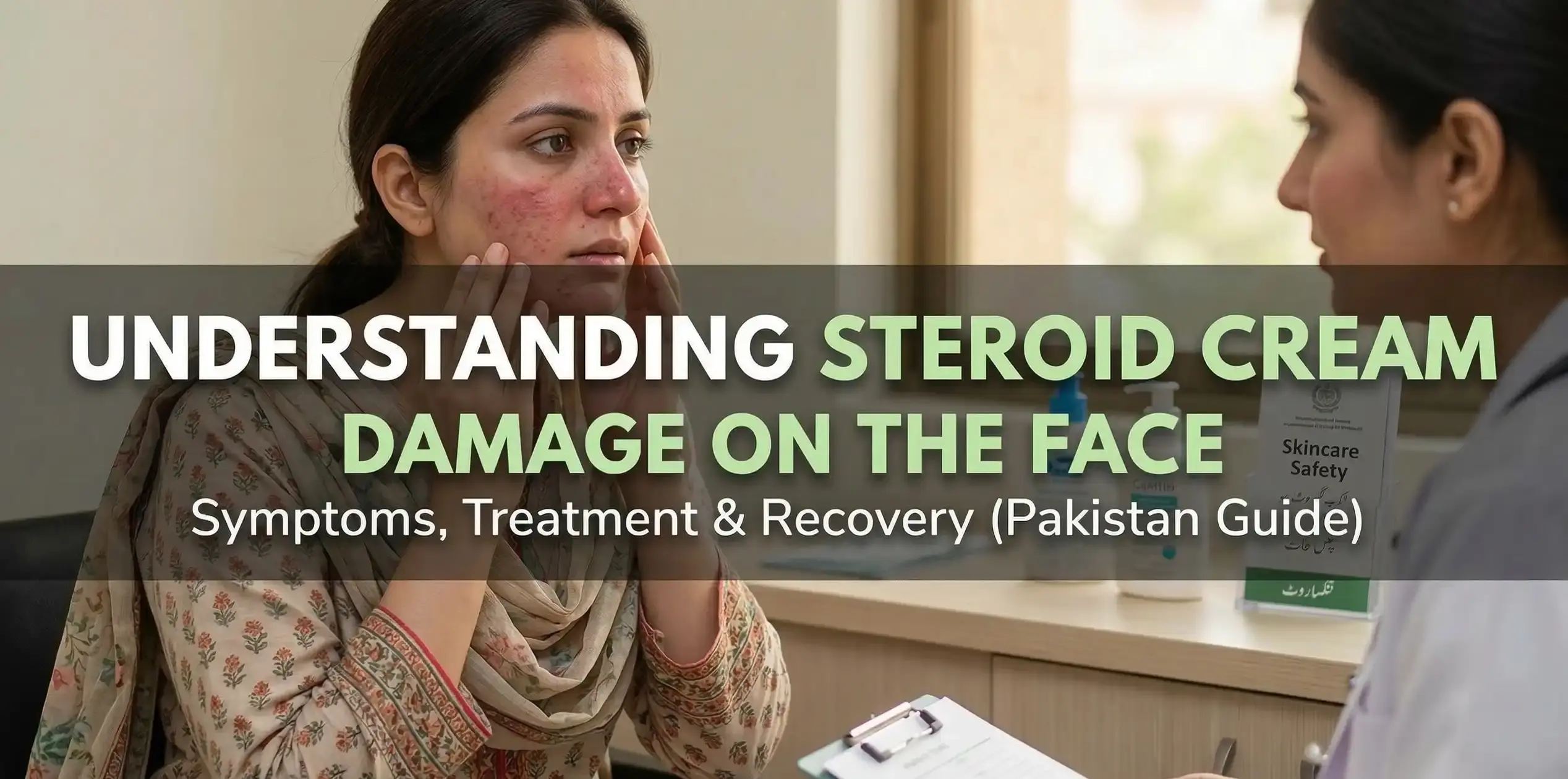
Steroid creams in formula products cause silent damage. If your face is red, burning, or thinning, it’s a warning sign. Steroids strip your barrier and dilate vessels. To heal, drop them instantly and use a ultra-gentle, ceramide-rich routine.
There is a particular kind of frustration that many Pakistani skincare users know all too well: you started using a cream to improve your skin, it worked beautifully at first, and then — slowly — things began to go wrong. Your skin became redder. More sensitive. You broke out in ways you never had before. And when you tried to stop the cream, your skin flared so badly that going back to it felt like the only option.
If this sounds familiar, you may be experiencing the effects of topical steroid damage — one of the most widespread and least discussed dermatological problems in Pakistan today. The good news is that this damage, even when significant, is reversible with the right approach. This guide is designed to give you the understanding and the tools to begin healing.
What Are Topical Steroids — And Why Are They in Skincare Products?
To understand the damage, it helps to first understand what topical steroids are and why they're used in the first place. Topical corticosteroids are a class of anti-inflammatory medications that, when applied to the skin, suppress immune activity, reduce redness, and calm irritation rapidly. They are legitimate, effective medicines — but they are designed to be used short-term, under medical supervision, for specific diagnosed conditions such as eczema, psoriasis, or allergic contact dermatitis.
The problem in Pakistan is not the existence of topical steroids — it's how they end up in everyday skincare. Potent steroids like betamethasone valerate, clobetasol propionate, and fluocinolone acetonide are frequently compounded into formula creams by local chemists, or included in commercially sold whitening and fairness creams without disclosure on the label. Because they dramatically reduce redness and create a smooth, "glowing" appearance very quickly, they feel like miracle products — especially to someone dealing with pigmentation, uneven skin tone, or acne. But that early improvement is deceptive. Beneath the surface, a cycle of dependence is already beginning.
How Do Steroid Creams Damage Facial Skin Over Time?
The face is the worst place to use potent topical steroids long-term. Facial skin is significantly thinner than skin on the rest of the body, more vascular, and far more sensitive to steroid-induced changes. To understand what goes wrong, think of your skin barrier as a well-maintained wall — sturdy, hydrated, and capable of repairing small cracks on its own. Topical steroids essentially put that repair process on pause. In the short term, the wall looks smooth and calm. Over weeks and months of use, however, the wall begins to erode.
There are several specific mechanisms through which this damage occurs. Steroids inhibit the production of collagen and elastin — the structural proteins that give skin its thickness and resilience — causing the dermis to physically thin. They suppress the skin's natural lipid production, dismantling the protective moisture barrier and leaving skin chronically dehydrated. They also cause blood vessel dilation near the skin's surface, producing the characteristic redness and flushing that eventually becomes permanent. And perhaps most insidiously, they disrupt the skin's microbiome — the delicate ecosystem of beneficial bacteria that helps regulate everything from oil production to immune defence — making skin prone to secondary bacterial and fungal infections.
Over time, the skin becomes genuinely dependent on the steroid to maintain its suppressed inflammatory state. When the cream is stopped, everything the steroid was holding back surges back at once — a phenomenon known as topical steroid withdrawal (TSW), sometimes called "red skin syndrome."
Common Symptoms of Steroid Cream Damage on the Face
The following symptoms are widely documented in dermatological literature and seen regularly in Pakistani patients who have used formula creams or compounded steroid preparations long-term. Not all symptoms appear at once — they typically emerge gradually, which is part of why the damage is so easy to miss in its early stages.
| Symptom | What It Looks / Feels Like | Why It Happens |
|---|---|---|
| Persistent redness & flushing | Hot, blotchy, or deep red skin — especially cheeks, nose, chin | Permanent dilation of superficial blood vessels |
| Skin thinning (atrophy) | Shiny, almost translucent skin; visible veins; easy bruising | Collagen and elastin breakdown from prolonged steroid suppression |
| Acneiform eruptions | Clusters of uniform red papules or pustules around mouth and cheeks | Disruption of skin microbiome and sebaceous gland activity |
| Burning & stinging | Intense sensitivity to water, moisturiser, or even air | Severely compromised skin barrier unable to buffer external stimuli |
| Rebound darkening | Skin becomes noticeably darker than original tone after stopping cream | Suppressed melanin production rapidly reactivates post-steroid |
| Perioral dermatitis | Rash of small inflamed bumps around the mouth and nose folds | Classic steroid-induced eruption pattern on facial skin |
| Increased sun sensitivity | Burns or darkens with minimal sun exposure; photophobia | Thinned skin with reduced UV-buffering capacity |
According to the American Academy of Dermatology, topical steroids should only be used on the face under direct medical guidance due to the dramatically increased risk of atrophy and vascular damage compared to other body areas — a caution that applies with even greater urgency to the high-potency steroids commonly found in Pakistani formula creams.
The Pakistan Context: Why This Problem Is So Widespread
It would be easy to look at the list of steroid side effects above and wonder how anyone continues to use these products. The answer lies in a combination of factors that are very specific to the Pakistani skincare market and cultural context.
First, there is the speed of results. Betamethasone-laced formula creams often produce visible improvement within three to five days — a timeframe that no safe, dermatologist-approved skincare product can match. For someone struggling with pigmentation, acne scarring, or uneven tone under real social and professional pressure to look a certain way, that speed is enormously compelling.
Second, these creams are freely available without prescription. A customer can walk into any pharmacy, general store, or beauty parlour and purchase a potent topical steroid — often without knowing what they're buying. The regulatory gap between what is legally required on ingredient labels and what is actually disclosed is significant.
Third, Pakistan's climate accelerates the damage. The country's intense UV radiation — with a UV index regularly exceeding 10 in summer — means that steroid-thinned skin is exposed to photo-damage that would not occur at lower UV levels. The heat and humidity in cities like Karachi and Multan also increase skin inflammation and secondary infection risk in barrier-damaged skin.
→ Related Reading: How to Repair Your Skin Barrier After Whitening Cream Damage
Step-by-Step Recovery Routine for Steroid-Damaged Skin
Recovery from topical steroid damage on the face requires a fundamental shift in approach: from seeking rapid results to prioritising long-term healing. The routine below is designed to be safe, achievable, and appropriate for Pakistan's climate and skincare context.
Step 1: Stop the Steroid Cream — Completely
There is no tapering strategy that works for most facial steroid creams used informally in Pakistan, because the concentration is unknown. The guidance from dermatologists familiar with TSW is clear: stop completely, accept that there will be a rebound period, and commit to the recovery process. Do not substitute one formula cream for another — many contain the same or similar ingredients under different names.
Step 2: Rebuild Your Cleansing Routine from Scratch
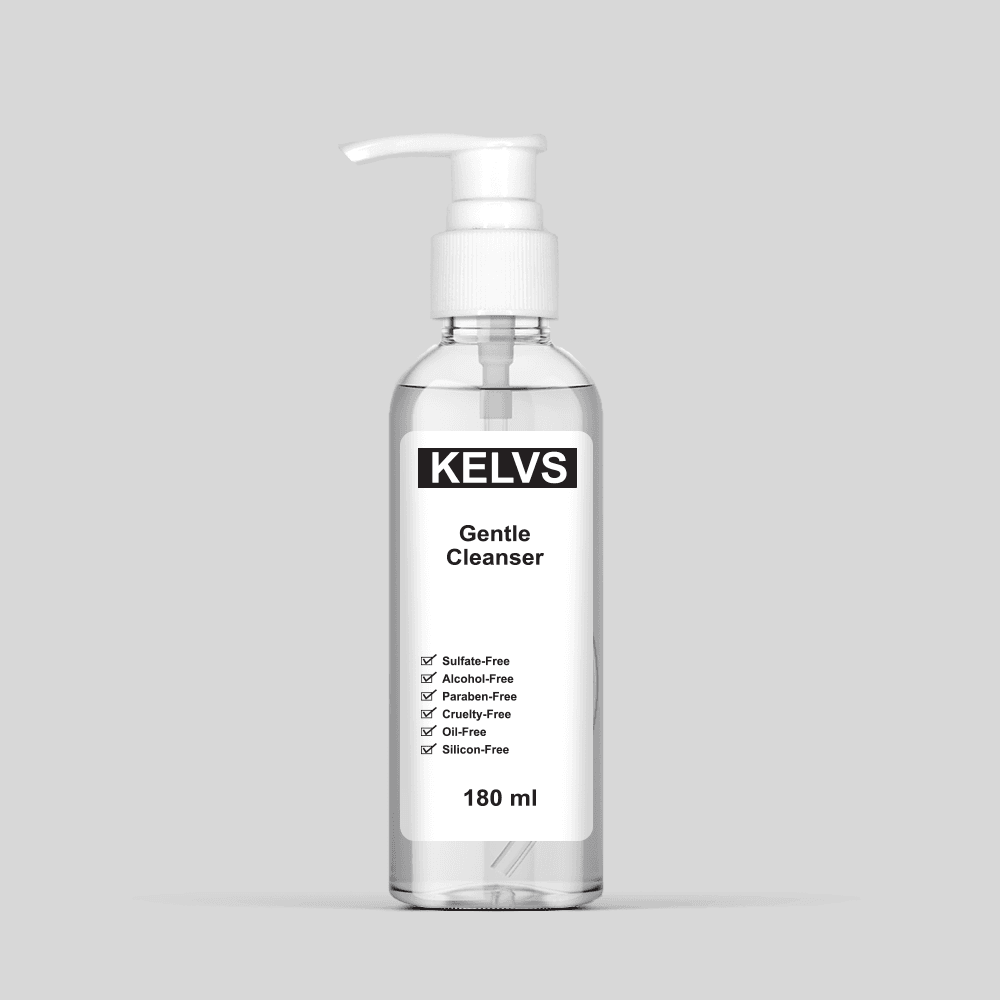
The first and most foundational product change you can make is your cleanser. Steroid-damaged skin has lost much of its natural oil production and pH buffering capacity, meaning even a "normal" cleanser can feel like sandpaper. You need something specifically formulated for compromised, sensitised skin — free from sulfates, artificial fragrance, and chemical exfoliants.
→ Learn More: Gentle Face Cleanser for Sensitive Skin
Step 3: Repair with Ceramide-Rich Moisturiser
After cleansing, immediately apply a fragrance-free, ceramide-rich moisturiser. Ceramides are the lipid molecules that form the structural "mortar" of your skin barrier — and steroid use depletes them significantly. Look for formulas that combine ceramides with panthenol (provitamin B5) and allantoin, both of which accelerate barrier repair in sensitised skin. Apply while the skin is still slightly damp to lock in moisture before it evaporates in Pakistan's dry or air-conditioned environments.
Step 4: Mineral Sunscreen — Every Morning, Without Exception
Steroid-thinned facial skin is extraordinarily vulnerable to UV radiation, and UV exposure is one of the primary triggers for post-steroid rebound darkening. Apply a mineral sunscreen containing zinc oxide or titanium dioxide at SPF 30 or above every morning — including overcast days and days spent indoors near windows. Chemical sunscreens (oxybenzone, avobenzone) can be irritating on reactive skin and are best avoided during the recovery phase.
Step 5: Rest Your Skin from All Active Ingredients
During the first four to six weeks of recovery, your entire routine should consist of three products only: a gentle cleanser, a ceramide moisturiser, and a mineral sunscreen. Pause vitamin C serums, retinol, niacinamide above 5%, exfoliating acids, and any product marketed as "brightening" or "resurfacing." Your skin needs to rest and rebuild — not be stimulated. Introducing actives too early is one of the most common reasons recovery stalls.
Step 6: Support Recovery from the Inside
Skin barrier repair is partly a nutritional process. Increase your intake of omega-3 fatty acids — found in fish, walnuts, and flaxseed, all readily available in Pakistani diets — which support lipid production in the skin. Staying well hydrated and reducing dietary sugar (which drives systemic inflammation) both meaningfully support the healing process from within.
What to Realistically Expect During Recovery
One of the most important things to understand about steroid cream recovery is that it will almost certainly get worse before it gets better. The first one to three weeks after stopping the cream typically bring a rebound flare — increased redness, sensitivity, dryness, and sometimes breakouts. This is your skin's inflammatory response awakening after being suppressed, and it is a normal and expected part of the process. It is not a sign that your skin cannot recover.
The AAD's guidance on restoring a damaged skin barrier consistently emphasises that the key to successful recovery is consistency with a minimal routine, not the addition of more products. Most users begin to see meaningful stabilisation between weeks four and eight, with continued improvement over three to six months. Severe, long-term steroid damage may take considerably longer — but recovery is achievable.
Frequently Asked Questions
Q1: How do I know if a formula cream contains steroids without seeing its ingredient list?
The clearest sign is an unusually rapid improvement in skin appearance — within three to seven days — that gradually requires more frequent application to maintain. Other indicators include a rebound flare every time you try to stop, skin that has become noticeably thinner or shinier over time, and redness or sensitivity that wasn't present before using the cream. A dermatologist can identify steroid-dependent skin patterns during a clinical consultation, and Pakistan's DRAP maintains alerts on products found to contain undisclosed steroids.
Q2: Is topical steroid withdrawal (TSW) dangerous, and how do I know if I have it?
TSW can range from mild to severely debilitating depending on the potency of the steroid used and the duration of use. Mild TSW may present as a manageable rebound flare; severe TSW can involve widespread red skin, oozing, intense burning, and significant impact on quality of life. If your skin reaction after stopping a cream is intense, spreading, or accompanied by systemic symptoms, seek dermatological assessment rather than managing it at home.
Q3: Will my skin ever return to its original tone after steroid-induced darkening?
Yes, in most cases. Rebound hyperpigmentation after steroid withdrawal is a temporary consequence of suppressed melanin activity suddenly reactivating — not permanent damage to your pigment cells. With consistent sun protection, gentle barrier repair, and patience, skin tone normalises over time. The process typically takes three to six months and is significantly accelerated by rigorous daily sunscreen use.
Q4: Can I use any brightening or whitening product during steroid cream recovery?
Not during the active recovery phase. The skin's barrier is compromised and its inflammatory threshold is at its lowest — any active ingredient, even a well-formulated vitamin C serum or niacinamide product, risks triggering further irritation. Wait until your skin has been stable and symptom-free for a minimum of four to six weeks before reintroducing any brightening actives, and do so one at a time, slowly.
Q5: Is KELVS Gentle Cleanser safe to use during steroid withdrawal?
Yes — KELVS Gentle Cleanser is specifically designed to be safe for the most sensitive and reactive skin types, including skin undergoing barrier repair after steroid damage. Its sulfate-free, fragrance-free formulation means it cleanses without disrupting the skin's lipid layer or pH balance. For skin in active TSW, start with a single daily wash and increase to twice daily as your skin's tolerance improves.
Q6: My family member is using a whitening cream that I suspect contains steroids. How should I approach this?
The most effective approach is a non-judgmental, information-first conversation — which is exactly the spirit in which this article is written. Share what you've learned about how steroids work and what the long-term effects look like. If the person is already experiencing symptoms of steroid damage, gently encourage them to see a dermatologist. Avoid shaming or urgency, which tends to make people defensive rather than open to change. The more you understand the issue yourself, the better equipped you are to help someone else navigate it.
Closing Thoughts
Steroid cream damage is not a failure of judgement — it's a failure of information. Millions of people in Pakistan are using these products without any understanding of what they contain or what they do, because that information has never been clearly made available to them. The fact that you are here, reading this, means you are already doing something different.
Healing takes time — more time than any formula cream took to cause the damage. But your skin has a remarkable capacity to repair itself when you stop working against it and start working with it. A gentle cleanser, a good ceramide moisturiser, and consistent sunscreen are not exciting products. But they are the ones that will actually get your skin back.
Disclaimer: This blog post is intended for educational purposes only and does not constitute medical advice. If you are experiencing severe skin reactions or suspect significant steroid damage, please consult a qualified dermatologist before beginning any treatment or recovery routine.
 Official
KELVS Gentle Cleanser | Sulfate-Free Daily Cleanse
Scientifically formulated for maximum efficacy with zero harsh irritants. Restores skin balance, clears pores, and accelerates visible recovery.