What Is Alpha Arbutin? The Complete Skin Brightening Guide
Waleed
02 Apr 2026

Alpha arbutin is a dermatologist-backed way to fade dark spots and acne marks without the damage of local whitening creams. It safely slows melanin to brighten uneven skin. Perfect for Pakistani skin, it works gently without stripping your barrier.
Introduction — A Safer Approach to Brightening
Every year, millions of people across Pakistan reach for whitening creams looking for a solution to dark spots, uneven skin tone, post-acne marks, and sun-related pigmentation. The desire for clearer, more even-toned skin is entirely understandable — and entirely achievable. What is often not understood, however, is the significant difference between how various products achieve that goal, and what they do to the skin in the process of doing so.
Many widely used formula creams and whitening products in Pakistan contain potent steroids, mercury compounds, or unregulated concentrations of bleaching agents that produce rapid but ultimately destructive results — thinning the skin barrier, triggering rebound darkening, and creating long-term sensitivity. The demand for a better alternative — something that actually works without causing harm — is exactly why alpha arbutin has become one of the most recommended brightening ingredients among dermatologists worldwide.
Alpha arbutin is not a trend. It is a well-studied, clinically documented skin brightening compound with a strong safety record and a mechanism that works with your skin's biology rather than against it. This guide explains everything you need to know about it — from how it works to how to use it correctly in Pakistan's climate.
What Is Alpha Arbutin?
Alpha arbutin is a naturally derived, water-soluble glycoside — a compound in which a sugar molecule (glucose) is bonded to hydroquinone. It is found naturally in the leaves of the bearberry plant (Arctostaphylos uva-ursi), as well as in smaller concentrations in blueberries, wheat, and pear skin. In skincare, it is most commonly used in its purified, synthesised form, which allows for stable, consistent concentrations across formulations.
The most important thing to understand about alpha arbutin is its relationship to hydroquinone. Hydroquinone has long been considered the gold-standard depigmenting agent in dermatology — but its side effects with long-term use, including chronic irritation, paradoxical darkening (ochronosis), and systemic concerns at high concentrations, have led regulators and dermatologists to seek alternatives. Alpha arbutin works through a very similar melanin-inhibiting mechanism, but because it releases hydroquinone gradually and locally — at the pigment cell level — it does so without the same risk profile.
Alpha Arbutin vs Beta Arbutin
There are two forms of arbutin used in skincare: alpha arbutin and beta arbutin. Alpha arbutin is the more stable isomer — it resists degradation from heat, light, and pH fluctuation, meaning it retains its efficacy in a bottle and on your skin for longer than beta arbutin. This stability advantage is why dermatologists and formulators consistently prefer alpha arbutin, and why it is the form found in well-designed brightening serums.
🔬 The Science, Simply Put
Alpha arbutin is a hydroquinone derivative that inhibits melanin synthesis without free hydroquinone being released into the skin at irritating concentrations. Its alpha-isomer structure gives it greater chemical stability and penetration efficiency than beta arbutin, making it both safer and more effective at equivalent concentrations. At the concentrations used in cosmetic formulations (typically 1–2%), it is well-tolerated on most skin types, including sensitive and barrier-compromised skin.
How Alpha Arbutin Works on Skin
Skin colour — and uneven skin colour — is determined primarily by melanin, the pigment produced by specialised cells called melanocytes in the basal layer of the epidermis. Melanin itself is not the problem; it is the body's natural UV defence system. The problem arises when melanin production is triggered unevenly by factors like sun exposure, hormonal changes, inflammation from acne, or skin trauma — producing concentrated deposits of pigmentation in specific areas that appear as dark spots, patches, or marks.
The enzyme that regulates melanin production is called tyrosinase. Alpha arbutin works by competitively inhibiting tyrosinase — it binds to the enzyme before tyrosine (the amino acid that starts the melanin production chain) can, effectively slowing the rate at which new melanin is produced. Without new melanin being continuously deposited in the skin, existing pigmentation gradually fades as the skin's natural cell turnover brings new, unpigmented cells to the surface.
This mechanism is fundamentally different from the approach taken by steroid-based whitening creams, which suppress skin inflammation temporarily to create the appearance of lightening — without addressing melanin at all. Alpha arbutin's results are therefore more gradual but more genuine: the skin becomes more evenly toned because the underlying pigmentation issue is being addressed, not masked.
According to the American Academy of Dermatology, ingredients that target the tyrosinase enzyme — the category to which alpha arbutin belongs — represent the most evidence-supported approach to long-term, safe hyperpigmentation management in clinical practice.
Benefits of Alpha Arbutin
- Reduces and fades dark spots — including sunspots, age spots, and post-inflammatory hyperpigmentation from acne
- Fades acne marks (PIH) — particularly the flat dark marks left after an acne lesion heals, which are among the most common skin concerns in Pakistan
- Improves overall skin tone evenness — over consistent use, skin appears more uniform in colour without altering its natural base tone
- Supports melasma management — as part of a broader dermatologist-guided routine; alpha arbutin reduces the rate of new melanin production in melasma-prone areas
- Well-tolerated on sensitive skin — unlike hydroquinone or high-concentration vitamin C, alpha arbutin at cosmetic concentrations rarely causes stinging, redness, or irritation
- No steroid dependency or rebound darkening — unlike many formula creams used in Pakistan, alpha arbutin does not create skin dependency or worsen pigmentation after discontinuation
- Stable in Pakistan's warm climate — the alpha-isomer's chemical stability means it maintains its potency despite temperature variations common across Pakistan's seasons
- Compatible with most routine ingredients — can be layered with hyaluronic acid, niacinamide, and SPF without interaction concerns
Alpha Arbutin for Different Skin Concerns
Alpha Arbutin for Acne Marks
Post-inflammatory hyperpigmentation (PIH) — the flat, dark discolouration left after an acne lesion heals — is one of the most prevalent skin concerns in Pakistan, and one of the most mismanaged. Many people attempt to address these marks with abrasive scrubs or steroid-containing creams, both of which worsen the underlying barrier and can deepen the marks over time.
Alpha arbutin addresses acne marks by slowing new melanin deposition at the site of the healed lesion. Because the skin is still actively producing melanin in response to the inflammation that caused the original spot, inhibiting tyrosinase during this window prevents the mark from darkening further — and reduces existing pigmentation as skin cells turn over. Consistent daily use combined with rigorous sunscreen application produces the best results for PIH.
Alpha Arbutin for Pigmentation
Sun-related pigmentation is exceptionally common in Pakistan given the country's UV intensity. Repeated UV exposure stimulates melanocytes beyond their normal activity — producing localised dark patches, freckling, and general uneven tone on the cheeks, nose, and forehead. Alpha arbutin used consistently in the morning routine (before sunscreen) provides a daily brake on melanin overproduction, gradually reducing existing patches while preventing the worsening that comes with continued UV exposure.
Alpha Arbutin for Melasma Support
Melasma — the hormonally triggered, symmetrical darkening most commonly appearing across the cheeks, upper lip, and forehead — is a complex condition that requires a dermatologist-guided, multi-modality approach for meaningful improvement. Alpha arbutin is a valuable component of such a routine: its tyrosinase-inhibiting action complements other melasma treatments and is safe enough for long-term use, which melasma management typically requires. It should not be positioned as a standalone cure for melasma, but as a safe, supportive daily-use ingredient within a broader treatment plan.
Alpha Arbutin for Uneven Skin Tone
For those whose primary concern is not a discrete dark spot but a general unevenness in skin tone — darker areas on the temples, around the mouth, or across the cheeks — alpha arbutin provides a slow, consistent improvement that builds over weeks and months of use. This is the use case where many users notice the most holistic, natural-looking results: the skin does not become lighter overall, but the contrast between areas of different tone gradually reduces.
Alpha Arbutin vs Hydroquinone
| Consideration | Alpha Arbutin | Hydroquinone |
|---|---|---|
| Mechanism | Inhibits tyrosinase gradually via glycoside delivery | Directly suppresses melanocyte activity — faster but more aggressive |
| Irritation Risk | Low — well-tolerated on most skin types | Moderate–High — common cause of redness, dryness, contact sensitisation |
| Long-Term Safety | Well established for long-term cosmetic use | Restricted or banned OTC in many countries; not for continuous long-term use |
| Ochronosis Risk | None documented at cosmetic concentrations | Documented with prolonged high-concentration use |
| Prescription Required? | No — available in OTC cosmetic formulations | Above 2%: prescription required in most regulated markets |
| Suitability for Pakistani Climate | High — stable in heat; no photosensitisation at cosmetic use | Caution — increases photosensitivity; requires strict sun protection |
| Suitable for Sensitive Skin | Yes — including barrier-damaged and reactive skin | Often not — frequently causes irritation on compromised skin |
| Speed of Results | Gradual — 4 to 12 weeks for visible improvement | Faster — but results not sustained after discontinuation in many users |
Verdict for Pakistani users: For those seeking a safe, independently purchasable, long-term brightening ingredient — particularly for acne marks, sun pigmentation, and uneven tone — alpha arbutin is the superior choice. Hydroquinone belongs in a dermatologist-supervised context only, and its widespread unregulated use in Pakistani formula creams is a documented clinical concern.
Alpha Arbutin vs Niacinamide
| Consideration | Alpha Arbutin | Niacinamide |
|---|---|---|
| Primary Brightening Mechanism | Inhibits tyrosinase directly — reduces melanin production at source | Inhibits melanosome transfer — reduces movement of pigment from melanocytes to skin cells |
| Barrier Support | Neutral — does not disrupt or significantly support the barrier | Active barrier support — stimulates ceramide synthesis, improves skin resilience |
| Anti-Inflammatory | Mild anti-inflammatory effect | Stronger anti-inflammatory action — reduces redness and reactive skin |
| Sebum Regulation | None | Yes — reduces sebum production; beneficial for oily and acne-prone skin |
| Can They Be Combined? | ✓ Yes — these two ingredients are highly complementary. Alpha arbutin targets melanin production; niacinamide targets melanin transfer. Used together, they address pigmentation via two separate pathways simultaneously, producing better results than either alone. | |
How to use them together: Apply alpha arbutin serum first (on clean skin), allow to absorb for 60 seconds, then apply a niacinamide moisturiser or apply them in separate morning and evening steps. There are no known incompatibility issues between these two ingredients.
Alpha Arbutin vs Vitamin C
| Consideration | Alpha Arbutin | Vitamin C (L-Ascorbic Acid) |
|---|---|---|
| Primary Role | Targeted pigmentation control via tyrosinase inhibition | Antioxidant protection + secondary brightening via melanin oxidation |
| Stability | Highly stable — resists heat, light, and pH changes | Unstable — oxidises quickly; requires careful formulation and storage |
| Sensitivity Risk | Low — well-tolerated on most skin types | Moderate — low-pH formulations can sting, especially on sensitised skin |
| UV Defence Contribution | None — does not provide UV protection | Yes — antioxidant action neutralises UV-generated free radicals |
| Best Climate Use | Highly suitable for Pakistan's heat and UV conditions — stable year-round | Requires careful storage; degrades faster in Pakistan's summer heat |
| Layering Compatibility | ⚠ Use strategically — apply vitamin C in the morning for antioxidant defence, alpha arbutin in the morning or evening for pigment control. Avoid mixing directly; allow each to absorb before layering the next product. | |
Key distinction: Vitamin C and alpha arbutin are not competitors — they address different aspects of the brightening equation. Vitamin C is primarily an antioxidant that provides incidental brightening; alpha arbutin is a dedicated depigmenting agent. On sensitive or reactive skin in Pakistan's heat, alpha arbutin is typically better tolerated as the primary brightening active.
How to Use Alpha Arbutin Serum Correctly
Alpha arbutin is a water-soluble active that is applied after cleansing and before moisturising — typically as a serum. The key principles of correct use are consistency, appropriate layering order, and non-negotiable sun protection.
☀️ Morning Routine — With Alpha Arbutin
- Gentle Cleanser — pH-balanced, fragrance-free; lukewarm water, pat dry
- Alpha Arbutin Serum — apply 2–3 drops to clean skin; press gently; allow 60 seconds to absorb
- Hyaluronic Acid Serum (optional) — layer over alpha arbutin for added hydration; compatible and complementary
- Moisturiser — ceramide-rich, fragrance-free; apply while skin is still slightly damp
- Mineral Sunscreen SPF 30+ — essential; without sunscreen, UV exposure continuously re-triggers melanin production and defeats the purpose of alpha arbutin entirely
🌙 Evening Routine — With Alpha Arbutin
- Double Cleanse (if wearing sunscreen) — micellar water first, then gentle cleanser; or single gentle cleanse if no sunscreen worn
- Alpha Arbutin Serum — 2–3 drops; press into clean skin; allow 60 seconds to absorb fully
- Niacinamide Serum (optional) — applied after alpha arbutin; allow each layer 60 seconds to absorb
- Moisturiser — slightly richer formula at night to support overnight barrier repair
Layering Order Principles
- Apply water-based serums (like alpha arbutin) before oil-based products and moisturisers
- Thinnest texture to thickest — serum → moisturiser → SPF
- Allow each layer 30–60 seconds to absorb before applying the next
- Do not mix alpha arbutin directly with vitamin C in the same step — use them in separate morning and evening applications, or allow a full absorption window between
- Do not use alongside high-strength AHAs/BHAs in the same routine step — these create unnecessary sensitivity without additional brightening benefit
KELVS Alpha Arbutin Serum is formulated with a stable 2% alpha arbutin concentration — the clinically studied level at which tyrosinase inhibition is effective and well-tolerated. The formula pairs alpha arbutin with hyaluronic acid for simultaneous hydration and pigment control, and is free from synthetic fragrance, parabens, and harsh preservatives that can aggravate sensitive or barrier-compromised skin. It is water-based, lightweight, and absorbs quickly — making it suitable for Pakistan's humid summers as well as dry winter conditions. Use morning and/or evening on clean skin before moisturiser and sunscreen.
Who Should Use Alpha Arbutin?
- Anyone with post-acne dark marks (PIH) — the primary use case in Pakistan; alpha arbutin consistently and safely reduces the appearance of flat dark marks left by healed acne
- Those with sun-related pigmentation — particularly relevant for Pakistan's high UV climate; alpha arbutin reduces melanin overproduction triggered by repeated UV exposure
- Melasma-prone skin — as a supportive daily-use ingredient within a dermatologist-guided melasma management plan
- Sensitive and reactive skin types — those who have not tolerated vitamin C, retinoids, or AHAs well will often find alpha arbutin easy to incorporate without irritation
- People recovering from whitening cream or steroid cream damage — once the skin barrier has been stabilised (typically after 4–6 weeks of a gentle minimal routine), alpha arbutin is one of the first brightening actives that can be reintroduced safely
- Anyone wanting a sustainable, long-term brightening approach — unlike steroid-based creams, alpha arbutin can be used continuously without dependency or rebound effects
Who Should Avoid Alpha Arbutin?
- Broken, actively inflamed, or compromised skin — if the skin barrier is severely damaged (oozing, weeping, or raw), alpha arbutin should be withheld until the barrier has recovered; it is not irritating in itself, but any active applied to broken skin absorbs unpredictably
- Confirmed allergy to hydroquinone — because alpha arbutin metabolises to hydroquinone in the skin, those with documented hydroquinone allergy or sensitivity should consult a dermatologist before using alpha arbutin
- Those expecting overnight results — alpha arbutin works gradually. Anyone expecting the rapid (artificial) results of steroid-based whitening creams will be disappointed and may abandon it before it has had time to work. Setting realistic expectations is essential to successful use
How Long Does Alpha Arbutin Take to Work?
Alpha arbutin works by regulating melanin production — a gradual biological process. Results require consistent, daily use and non-negotiable sunscreen. The following timeline represents typical outcomes for users with mild to moderate pigmentation concerns using a 1–2% concentration alpha arbutin serum twice daily with SPF 30+ applied every morning.
| Timeframe | What to Expect | What It Means |
|---|---|---|
| Week 1–2 | Skin feels well-hydrated; no irritation; no visible change in pigmentation yet | Alpha arbutin is establishing at the skin level and beginning to inhibit tyrosinase. The biological groundwork is being laid. This is normal and expected. |
| Week 3–4 | Some users notice existing dark marks appear slightly less prominent; overall tone may begin to look more even | Cell turnover is beginning to bring unpigmented cells to the surface. Melanin inhibition is reducing new pigment deposition. Early visible results. |
| Week 5–8 | Clearer reduction in the darkness of spots and marks; skin tone appears more uniform; PIH marks look visibly lighter | Consistent melanin inhibition combined with natural cell turnover is producing cumulative, visible brightening. This is the primary result window for most users. |
| Week 8–12 | Significant improvement in overall evenness; acne marks substantially faded; melasma patches may be visibly reduced | Full cycle of skin cell renewal combined with sustained tyrosinase inhibition. Results at this stage represent genuine, non-reversing improvements in pigmentation. |
| Beyond 12 Weeks | Continued gradual improvement; maintenance use prevents recurrence | Alpha arbutin can be used long-term for maintenance. Without ongoing sun protection, UV exposure will re-trigger pigmentation regardless of brightening ingredient use. |
Common Mistakes When Using Alpha Arbutin
Using Alpha Arbutin Without Sunscreen
This is the single most common reason people report that alpha arbutin "doesn't work." Without SPF, UV exposure continuously stimulates melanin production at a rate that exceeds what alpha arbutin can inhibit. The result is no visible progress despite consistent serum use. Always apply mineral sunscreen as the final morning skincare step.
Expecting Results in Under Two Weeks
Alpha arbutin operates on the skin's natural cell turnover timeline — approximately 28 days in younger adults, longer in older skin. Visible improvement cannot be expected before new, unpigmented skin cells have reached the surface. Abandoning the product before the 6–8 week mark is abandoning it before it has had time to work.
Over-Layering Active Ingredients
Adding retinol, AHAs, high-concentration vitamin C, and alpha arbutin into a single routine simultaneously — a common approach in Pakistan's serum-stacking culture — does not accelerate results. It overwhelms the skin barrier and frequently triggers the sensitivity and breakouts that make brightening harder, not easier. Alpha arbutin works best as the primary brightening active in a restrained, purposeful routine.
Continuing to Use Formula Creams Alongside Alpha Arbutin
Using alpha arbutin while continuing to apply a steroid-containing formula cream is counterproductive. The steroid component creates artificial lightening and barrier damage that undermines both the safety and efficacy of alpha arbutin. The two approaches are fundamentally incompatible — choose one direction and commit to it.
Applying to Unclean or Wet Skin
Alpha arbutin is most effective when applied to clean, dry or barely-damp skin immediately after cleansing. Applying it over residual makeup, sunscreen, or heavy moisturiser reduces absorption and efficacy. Cleanse first, pat dry, then apply.
Is Alpha Arbutin Safe for Sensitive Skin?
Yes — and it is one of the specific reasons dermatologists recommend it as a starting brightening ingredient for people whose skin is reactive, barrier-compromised, or recovering from the damage caused by harsh whitening creams or steroid-containing formula products.
Unlike hydroquinone (which directly and aggressively alters melanocyte activity), high-concentration vitamin C (which operates at a low pH that can cause stinging on sensitised skin), or retinoids (which accelerate cell turnover at a rate that often overwhelms compromised skin), alpha arbutin at cosmetic concentrations (1–2%) delivers its brightening action gradually and with a minimal irritation footprint. It does not disrupt the skin's pH, does not chemically exfoliate the barrier, and does not provoke inflammatory responses in most users.
For those recovering from whitening cream damage, alpha arbutin should be introduced only after the skin barrier has been stabilised — typically after four to six weeks of a gentle routine consisting only of a fragrance-free cleanser, a ceramide moisturiser, and a mineral sunscreen. Once the skin is calm and not actively reactive, alpha arbutin is typically one of the first actives that can be reintroduced safely and with meaningful benefit.
DermNet's clinical overview of depigmenting agents notes that hydroquinone alternatives, including alpha arbutin, are preferred for patients with sensitive skin or those who have experienced irritation from conventional depigmenting treatments — a category that describes a significant proportion of Pakistani skincare users with formula cream or steroid cream histories.
Frequently Asked Questions
Q1: Is alpha arbutin safe for daily use?
Yes. Alpha arbutin at cosmetic concentrations (1–2%) is safe for daily use in both morning and evening routines. Unlike hydroquinone, which requires periodic breaks and medical supervision for long-term use, alpha arbutin has a well-established safety record for continuous daily application. There are no documented concerns with daily use in otherwise healthy skin.
Q2: Can alpha arbutin remove pigmentation permanently?
Alpha arbutin can significantly fade existing pigmentation and prevent new pigmentation from forming — but the underlying triggers for melanin overproduction (UV exposure, hormonal changes, inflammation from acne) remain. If those triggers continue unchecked — particularly sun exposure without SPF — pigmentation will return regardless of which brightening ingredient is used. For sustained results, alpha arbutin must be combined with consistent sunscreen use, and any underlying triggers (acne, hormonal imbalance) should be addressed alongside it.
Q3: Can I use alpha arbutin with niacinamide?
Yes — these two ingredients are among the most compatible brightening actives in skincare. They address hyperpigmentation through two distinct, non-competing mechanisms: alpha arbutin inhibits melanin production, while niacinamide inhibits melanin transfer. Used together, they target pigmentation via dual pathways without interaction or irritation concerns. Apply alpha arbutin serum first on clean skin, allow it to absorb, then apply your niacinamide product.
Q4: Can I use alpha arbutin with vitamin C?
Yes, but with timing strategy. Vitamin C (especially in its L-ascorbic acid form) operates at a low pH that can temporarily compromise the skin environment if layered directly with alpha arbutin. The most practical approach for Pakistani users is to use vitamin C in the morning (followed by sunscreen) and alpha arbutin in the evening — or to choose a stabilised vitamin C derivative like ascorbyl glucoside, which is pH-compatible and can be used in the same routine step as alpha arbutin without interaction concerns. Alternatively, both can be used in the morning with a 60-second absorption window between them on non-sensitive skin.
Q5: Is alpha arbutin better than hydroquinone for Pakistani users?
For most Pakistani users seeking an independent, safe, long-term brightening solution, yes. Hydroquinone is clinically more potent and faster-acting, but requires prescription supervision, carries documented risks of irritation and ochronosis with prolonged use, and has higher photosensitivity considerations — particularly significant in Pakistan's UV environment. Alpha arbutin is slower but safer, requires no prescription, can be used long-term without medical supervision, and is appropriate for the sensitive or barrier-compromised skin frequently seen in users with formula cream histories. For complex conditions like severe melasma, a dermatologist may still prescribe hydroquinone in a supervised context — but as a daily-use consumer brightening ingredient, alpha arbutin is the more appropriate and better-tolerated choice.
Q6: Is alpha arbutin safe to use in Pakistani weather — including summer heat?
Yes. Alpha arbutin's stability as the alpha-isomer of arbutin means it resists degradation from heat and light far better than other brightening actives like vitamin C (L-ascorbic acid) or retinoids. It does not increase photosensitivity the way hydroquinone does, making it suitable for year-round use in Pakistan's high-UV environment. The one non-negotiable in Pakistani weather is sunscreen — particularly given UV indices that frequently reach 10–12 in summer. Apply mineral SPF 30+ every morning after your alpha arbutin serum, and reapply if spending extended time outdoors.
The Intelligent Choice for Pakistani Skin
Pakistan's skincare market is flooded with products that promise rapid results through aggressive, poorly understood means. Alpha arbutin represents the opposite philosophy: a thoroughly studied, mechanism-specific brightening ingredient that works with the skin's biology, can be used independently and safely, and produces results that are genuine rather than temporary.
It will not transform your skin in a week. But used consistently, applied correctly, and paired with the sun protection that Pakistan's UV environment demands, it will deliver meaningful, lasting improvement in dark spots, acne marks, and uneven tone — without the barrier damage, steroid dependency, or rebound darkening that define so many Pakistanis' experiences with whitening creams.
That is not a promise of perfection. It is something more useful: a reliable path to healthier, more even skin that does not require compromising your skin's long-term health to get there.
Disclaimer: This blog post is intended for educational purposes only and does not constitute medical advice. For complex pigmentation conditions including severe melasma or persistent post-inflammatory hyperpigmentation, please consult a qualified dermatologist for personalised guidance.
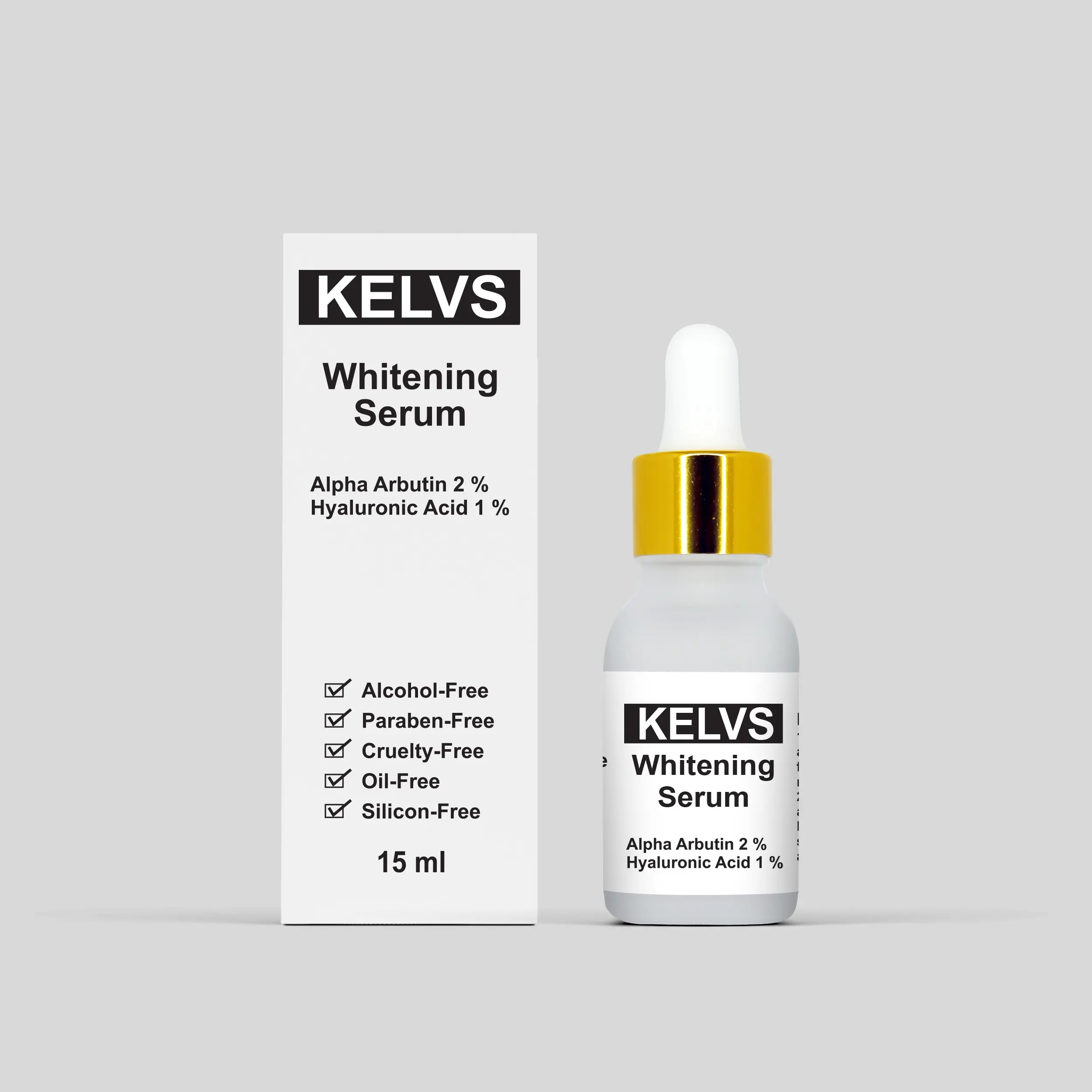 Official
KELVS Whitening Serum | Fades Dark Spots
Scientifically formulated for maximum efficacy with zero harsh irritants. Restores skin balance, clears pores, and accelerates visible recovery.